Do We Risk Turning the World into an Archipelago?
Adolfo Ramírez – Engineer, contributor at ITBS
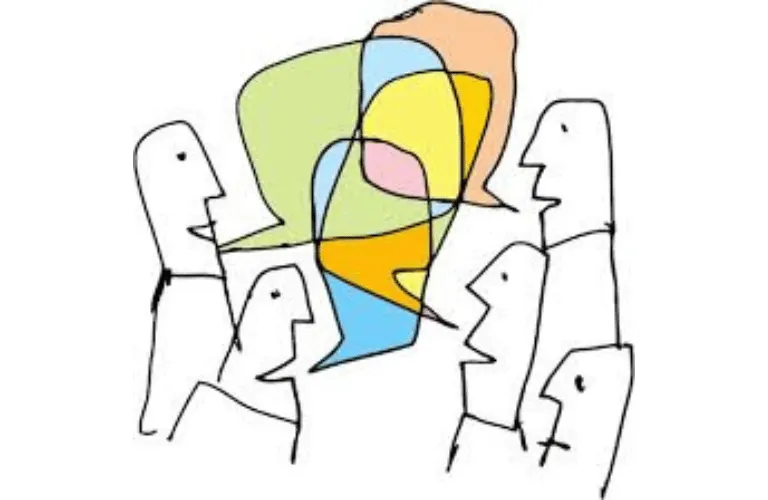
We are building a more fragmented world than ever before. It doesn’t happen all at once, but quietly: conversation by conversation, algorithm by algorithm, choice by choice.
More people are retreating into environments where everyone thinks alike. They seek certainty instead of contrast. Affinity instead of diversity. The result is what we might call a social archipelago: groups that coexist but barely interact.
From the inside, each island perceives its worldview as the right one—almost as if it were the only possible one.
Technology is accelerating this movement. Tom Chatfield (@TomChatfield), a British writer and philosopher of technology, explains how digital environments are not neutral: they reinforce what we already believe, filter out what makes us uncomfortable, and reduce the cost of living without contradiction. Disagreement is no longer managed—it begins to be avoided.
Losing Trust in the Future
When a society loses trust in the future, fragmentation stops being a symptom and becomes a survival strategy. Each island closes in on itself because opening up seems too costly and even uncomfortable. But those islands are not abstract. They are built by people.
And hoping that institutions or companies will fix what is breaking is, deep down, just another form of comfort.
The archipelago was not built by algorithms. We are building it ourselves—with every comfortable choice, every source we avoid, every conversation we don’t want to have. Sometimes out of convenience. Other times out of fear. And sometimes simply because disagreeing costs more than we’re willing to pay.
Fragmentation advances because it is easier to confirm than to question, more comfortable to ignore than to understand, less costly to move away than to move closer. There is no moment when someone decides to live inside a bubble. It happens slowly, without us noticing, through a series of small concessions that seem reasonable on their own.
Each gesture seems irrelevant. The problem is that millions of small gestures end up building a world where no one truly meets anyone else.
This phenomenon, naturally, does not stay outside companies. It comes in with people, settles into teams, and shapes cultures without anyone explicitly deciding to do so.
When contrast disappears inside an organization, the ability to anticipate disappears with it. When disagreement is avoided, decisions become poorer and innovation fades.
Organizations are not immune to the archipelago effect. They can become just another comfortable, homogeneous island—or, on the contrary, a space where different perspectives coexist.
That difference is shaped by culture and by people, but it doesn’t happen on its own. Leaders have to create the right conditions: spaces where disagreement is possible and not penalized, where those who think differently don’t have to stay silent to fit in, where diversity of judgment is treated for what is strength, not a threat.
Bridges Will Not Build Themselves
Grand gestures are not required. Fragmentation is being built through small decisions, and it can be undone the same way.
It’s enough to read something that doesn’t confirm what we already think. To listen without looking for the moment to rebut. To accept that an idea that irritates us may still contain some truth. It’s not about being right. It’s about not stopping listening.
Because growth—personal, professional, and collective—does not happen inside a bubble. It happens when someone decides to cross to the other side. And that brings us to the question: Are we willing to build bridges?