What are stablecoins or stable digital currencies for?
By Mario A. Beroes R.- Communications at IT Business Solutions
In the digital world they are the “latest trend” and this is due to their simple function, which is to maintain their value constant to facilitate payments, transfers and cross-border operations, which are used outside the traditional banking system. They are stablecoins or stable digital currencies.
Stablecoins rely on the principles of decentralization facilitated by the technological innovation and infrastructure of the blockchain, which is a distributed and decentralized recording technology that enables the creation of an immutable and transparent digital ledger.
And what are they for?
They are not legal tender and neither are they (unless expressly stated) publicly offered securities issued under capital market regulations.
They aim to combine the best of both worlds: the stability of cash and the speed of the crypto universe. There are different ways of backing them, from reserves in banks, to volumes in precious metals, to algorithmic systems
They are, according to Lya Glaentzlin D’ Ascoli, a lawyer graduated from the Universidad Católica Andrés Bello (UCAB) and expert in digital transformation, the opposite of traditional money, which also “derives its value from the authority of a government and the corresponding regulatory framework”.
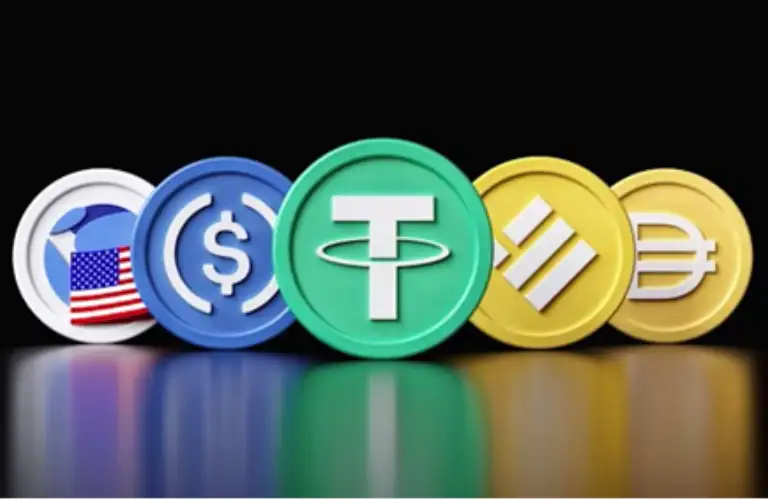
MOUs are private issues made by international companies, and therefore subject to various categories of government requirement and control. Among the best known are:
- Tether (USDT) was the first and currently the most widely used in the world, launched in 2014 initially denominated Realcoin by Tether Limited based in the British Virgin Islands, controlled by the company Bitfinex which operates an Exchange.
- Circle (USDC and EURC) issued by Circle Internet Financial LLC, registered as a Money Services Business (MSB) with FinCEN (Financial Crimes Enforcement Network) of the U.S. Treasury Department, with regular audits and with the particular circumstance that as a company it recently listed on the New York Stock Exchange (NYSE under the symbol CRCL) through an initial public offering of securities (IPO).
- Paxos (USDP, PAXG), issued by Paxos Trust Company is a New York trust licensed entity supervised by the NYDFS, has a US dollar-pegged version and a bullion-pegged version stored in LBMA vaults in London, UK.
Stablecoins are being integrated into payment systems such as Visa, Shopify, Banking Institutions and digital platforms. All seek to simplify cross-border transfers and payments to suppliers using interoperable digital platforms, which currently often combine series of transactions concluded between individuals and/or legal entities, with regulated institutions of the traditional physical world and digital platforms of the Blockchain ecosystem that has a sector known as Decentralized Finance or DeFi.
Regulated and unregulated
The reality is that there is currently an absence of regulatory harmonization regarding stablecoins, with positions ranging from the most conservative to the most liberal.
Few, but specific regulations have already been issued for stablecoin operations. In this regard, Europe stands out for the enactment and progressive entry into force of MiCA (Markets in Crypto-Assets Regulation), which establishes a harmonized regulatory framework for cryptoassets in the European Union.
In the Americas and the Caribbean there are several jurisdictions that have issued rules to regulate the issuance of digital assets (with varied scopes, definitions and areas of coverage), but they are mainly focused on establishing a regulatory framework for the public offering of investment in new digital asset projects that are used as a mechanism to raise funds for cryptocurrency projects, often before the project is fully developed.