When AI Enhances Human Talent
By Tomás Gil/CTO en EMBAT, telecoms engineer (collaborator) at IT Business Solutions
Artificial intelligence is an unstoppable reality that is already marking a turning point in the business world, especially in finance. According to a report by the National Observatory of Technology and Society, by 2024, 11.4% of Spanish companies with 10 or more employees will be using artificial intelligence (AI) technologies, a percentage that rises to 44% in the case of companies with more than 249 employees. However, its introduction cannot be reduced to a technological fad or an implementation exclusive to the IT department. Its true impact is achieved when it is integrated across the organization, always guided by human talent and supported by the management team.
Traditionally, most teams, from finance to human resources to marketing, have focused on manual tasks, repetitive processes, and decisions based on fragmented or outdated information. Automation and access to real-time data are changing this reality, allowing professionals to free themselves from operational tasks to focus on their personal, professional, and business growth. In areas such as finance, for example, it is now possible to automate more than 90% of accounting entries associated with bank transactions, freeing up to 10 hours per week per team. This not only minimizes errors, but also allows those resources to be allocated to decisions with greater strategic impact.
A concrete example is cash flow forecasting in the world of finance. Using machine learning algorithms, it is now possible to anticipate cash flow trends, allowing finance teams to manage liquidity more securely and proactively. This predictive capability not only provides operational peace of mind for the company, but also allows financial decisions to be made further in advance, reducing margins of error and strengthening the organization’s ability to adapt and overcome challenges.
Beyond traditional economic indicators such as ROI, the implementation of artificial intelligence is giving rise to a new key metric: operational happiness. Freed from these repetitive tasks, teams can be more focused on adding value to the company, more motivated, and take a much more human approach. AI, when implemented well, not only improves efficiency but also transforms the work experience. Studies such as those by PwC reveal that finance teams working with AI and automation tools are up to 33% more productive and enjoy a significantly improved work environment. The effects are as evident as they are positive: greater talent retention, more capacity for innovation, and clearer alignment with the company’s strategic objectives.
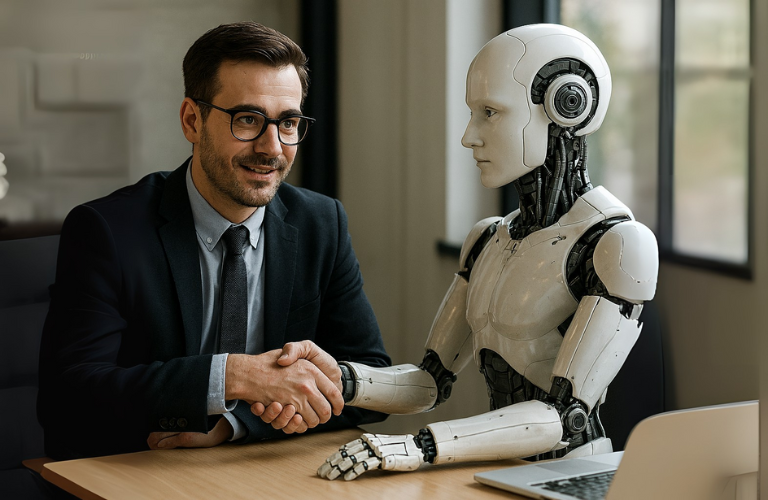
However, its implementation cannot depend on isolated initiatives by strategic profiles or company employees; its integration must start from the strategic conviction of the company’s management levels. They are responsible for introducing and communicating this technology and its virtues as a support for the teams’ daily work. It is essential to make it clear that in no case does it replace human work, but rather facilitates it. Nor should it be seen as an IT project to which employees must adapt, almost out of obligation. Ideally, it is a cross-cutting cultural change designed to facilitate the daily work of all employees, and in order for it to be successful and adapted by the entire team, it must stem from the commitment of the management team.
The human integration of AI into a company’s teams is particularly important because this technology must always be managed by ethics, supervision, and clear governance that responds to the company’s corporate values. Automated decisions cannot and should not escape human judgment; they must serve the business, not stand apart from it. Uncontrolled or autonomous and decentralized AI can generate bias, destroy trust between teams, and lead to opaque decisions. That is why the integration of human talent is the guarantee of quality, empathy, and oversight.